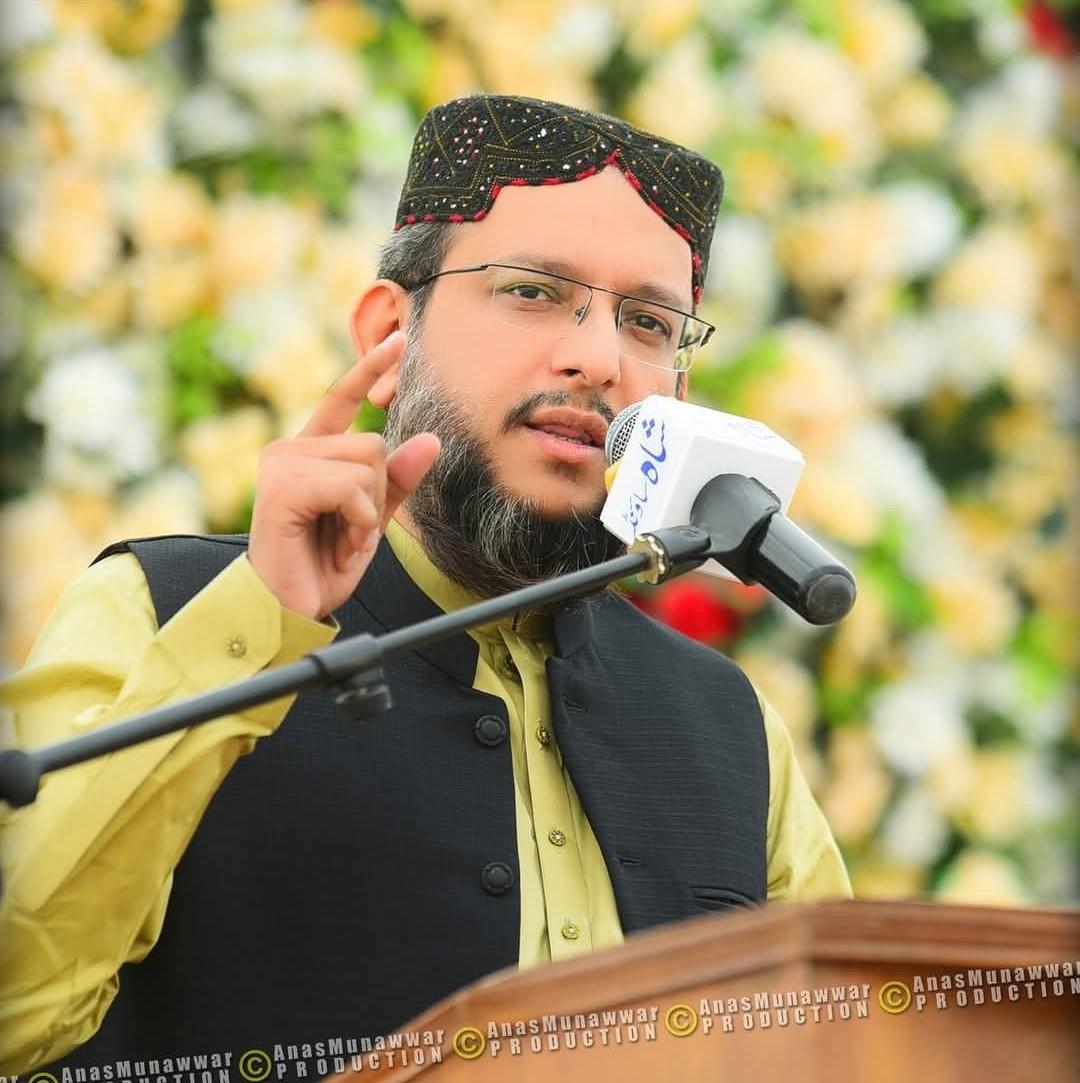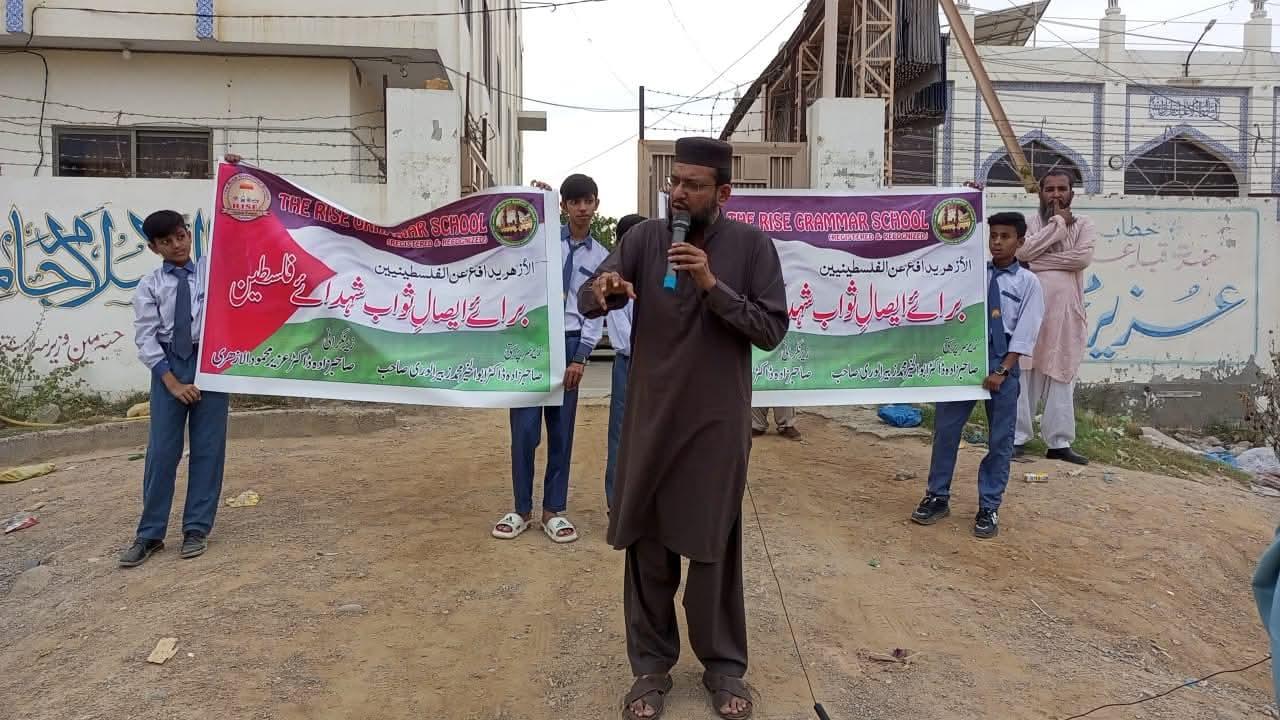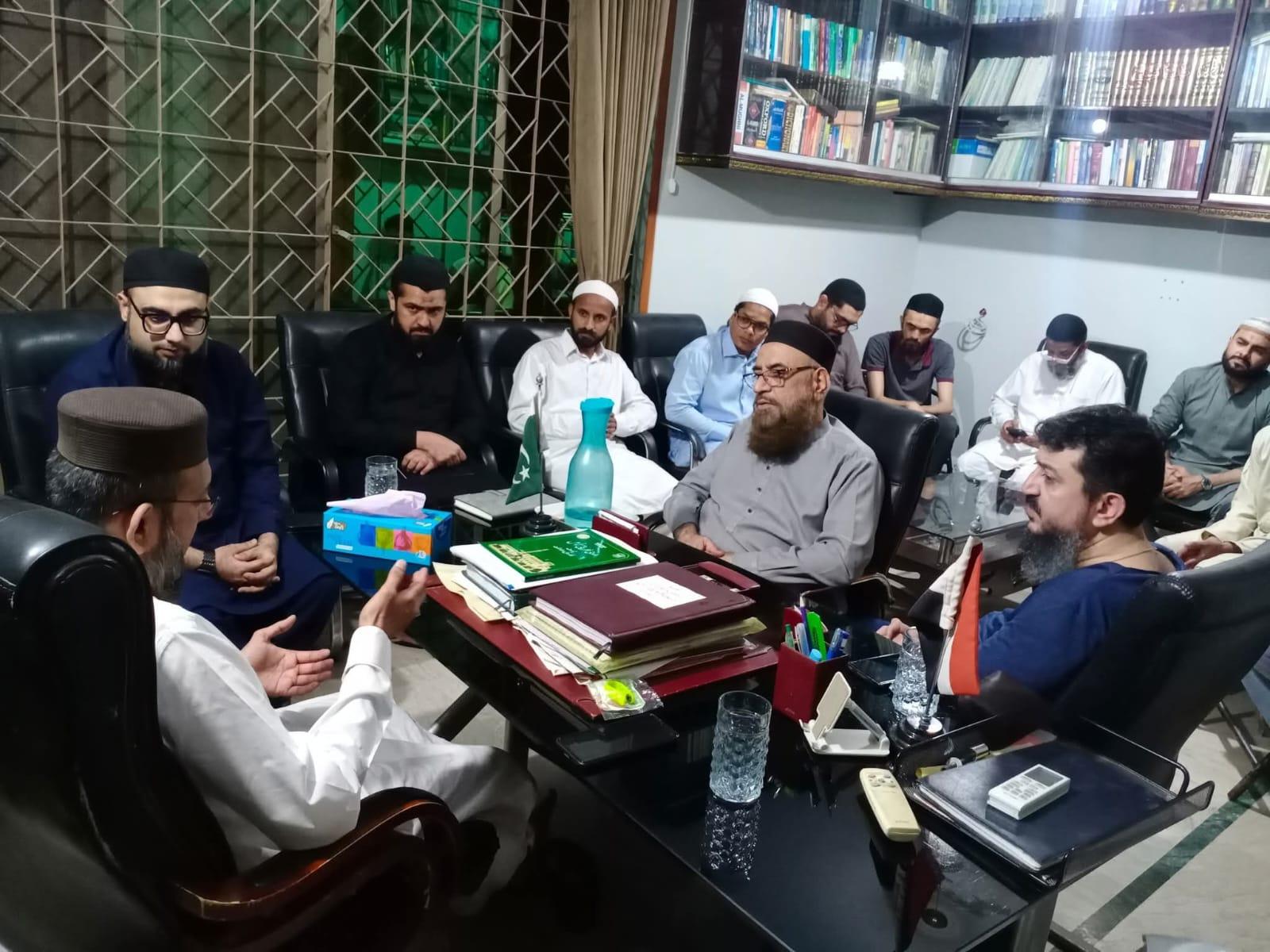
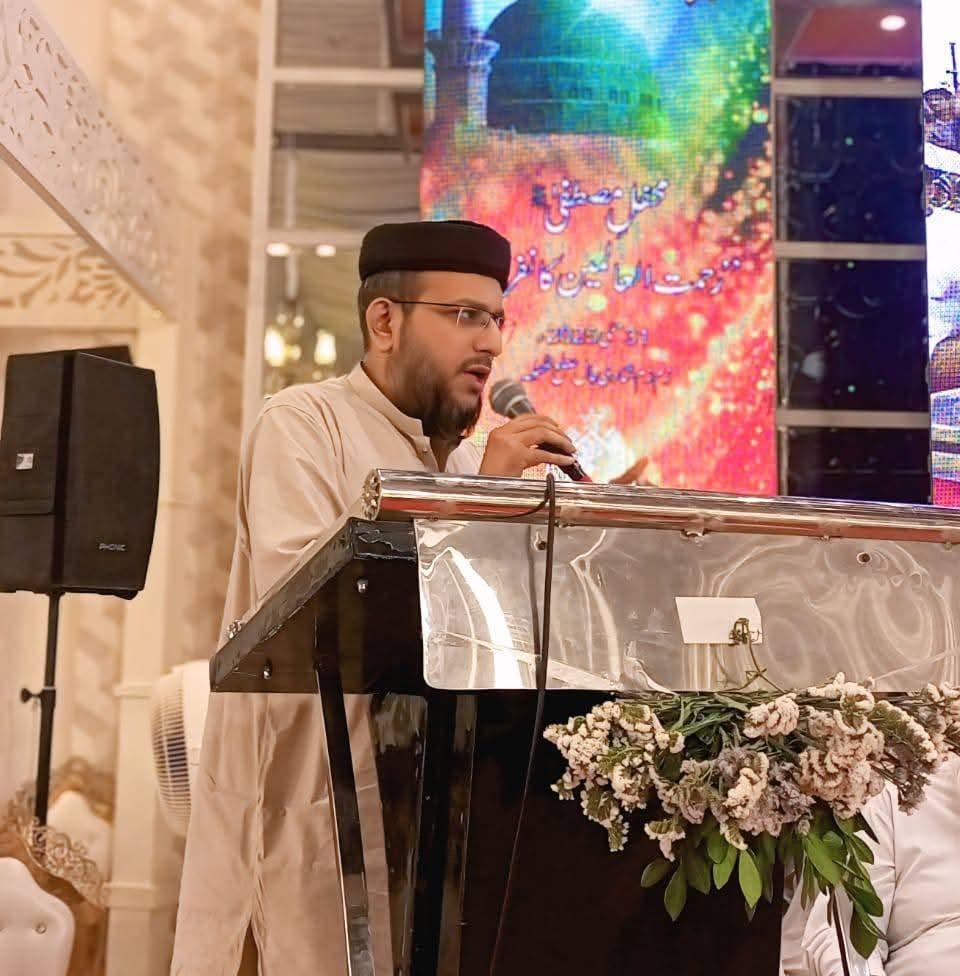
Dr. Sahibzada Uzair Mahmood Al-Azhari, Member of the Council of Islamic Ideology Pakistan and President of Ruknul Islam Jamia Mujaddidia, recently addressed a large gathering at the Rahmatul-lil-Alameen Conference held in Thatta. In his powerful speech, he spoke about an important topic: the feeling of guilt (احساسِ گناہ) and its role in true repentance and reform, while also clarifying misconceptions about the age of marriage in Islam.
Dr. Uzair began by sharing a profound hadith from Sahih Bukhari:
“A man came to the Messenger of Allah ﷺ and said, ‘O Messenger of Allah! I have committed an act deserving a prescribed punishment, so please execute it on me.’ The Prophet ﷺ did not question him. Meanwhile, the time for prayer came, so the Prophet ﷺ led the prayer, and the man prayed with him. After the prayer, the man repeated, ‘O Messenger of Allah! I have committed a sin deserving punishment.’ The Prophet ﷺ asked, ‘Did you not pray with us just now?’ The man replied, ‘Yes, I did.’ The Prophet ﷺ said, ‘Then Allah has forgiven your sin.’”
Dr. Uzair highlighted that this companion became deserving of Allah’s forgiveness and the Prophet’s ﷺ mercy because he felt genuine guilt for his sin and came forward with honesty. He stressed how today’s society commits countless wrongs, big and small, yet people have lost the true sense of wrongdoing and accountability.

He linked this to a pressing contemporary issue — the recent passing of a controversial law in Pakistan that prohibits marriages for individuals under the age of 18. Dr. Uzair reminded the audience that the Council of Islamic Ideology Pakistan had already rejected this law with clear scholarly reasoning. He explained in simple words that the core danger of this law is that it could promote zina (illicit relationships) by making lawful nikah more difficult, thus opening doors to social corruption.
Clarifying misconceptions, Dr. Uzair emphasised that the Prophet Muhammad ﷺ marrying Sayyidah Aisha (رضی اللہ عنہا) at a young age does not mean it is obligatory for everyone to marry off their daughters at 10, 12, or 16. There is no command or binding ruling for this in any hadith. Rather, Islam’s principle is that marriage after physical and mental maturity helps close the doors to immorality and safeguards modesty and chastity.
He further explained that parents can arrange marriages at 20, 25, or whenever is suitable for their circumstances — but the wisdom from the Prophet’s ﷺ example is to recognise the protection that early marriage can provide when maturity is reached.
Addressing the gathering directly, Dr. Uzair turned to the Provincial Minister for Religious Affairs, Syed Riaz Hussain Shah Sherazi, who was present at the conference. He expressed his hope that the Minister too would recognise the danger of this misguided legislation and would do whatever is within his capacity to stop it. He prayed that whoever strives to protect this Sunnah and stop this wrong will earn the pleasure of Allah and His Beloved ﷺ.
In the end, Dr. Kokab Noorani Okarvi, another respected scholar present, stood up to pay tribute to Dr. Uzair Mahmood Al-Azhari for his courage and boldness in defending the truth — both at the conference and within the Council. He praised Dr. Uzair’s fearlessness, saying that such bravery and strength of faith are only possible for a personality whose lineage and connection go back to the great reviver, Imam Rabbani Mujaddid Alf Thani (رحمۃ اللہ علیہ).
May Allah accept these efforts to defend the Shari‘ah, protect our youth, and guide our society towards modesty and righteousness. Ameen.